Derwent River Big Swim — Hobart
34km | 7:46:05 | Night swim
Start: 11:30pm, 24 March
Water temperature: ~17.2°C rising to ~17.9°C
Air temperature: ~15°C
From Perth heat to Hobart cold
March can feel like two different seasons when you move between Perth and Hobart in the space of a few days.
I finished Port to Pub on Saturday 21 March under blazing sun — the kind of heat that dictates your entire day, where exercise has to be done early and air conditioning becomes a strategy rather than a luxury. Two days later, after flying from Perth to Hobart on the 23rd, I stepped off the plane into wind, cold, and about 15 degrees. Sweatshirts came straight back out of the suitcase.
It genuinely felt like going from the height of summer to the edge of winter. That contrast framed everything about this swim — physically and mentally.
Meeting Val, and trusting the river
On the day of the swim I met Val, my pilot — a swimming legend with Olympic and open‑water experience, and someone who truly understands swimmers. That matters enormously. He’s experienced, highly communicative, funny, and brings a swimmer’s mindset to piloting. From the start, it felt like working with someone who would read the water and the person in it.
We met for lunch to talk through the swim and check conditions, including water quality. Hobart hasn’t had much rain since December, but Val said it was important to be sure there were no issues with run‑off. Everything checked out.
After that, I did something very deliberate: I turned around and slept. A solid nap from about 4pm to 7pm — essential when you’re about to swim through the night.
Soup, nerves, and a very dark start
I’d been worried about the cold, so we prepared carefully. My mum had made her famous leek and potato soup — a staple that has been fuelling swims and adventures since the mid‑1980s and still feels like the best possible “keep‑me‑warm” race food.
After a sensible dinner (chicken and potatoes), we took an Uber to the start at the New Norfolk Bridge. It was dark. Not just low‑light dark — properly, deeply dark. Large stretches of the Derwent have very little ambient light, and once you leave the glow of the start area, you are swimming almost entirely inside your own bubble of focus.
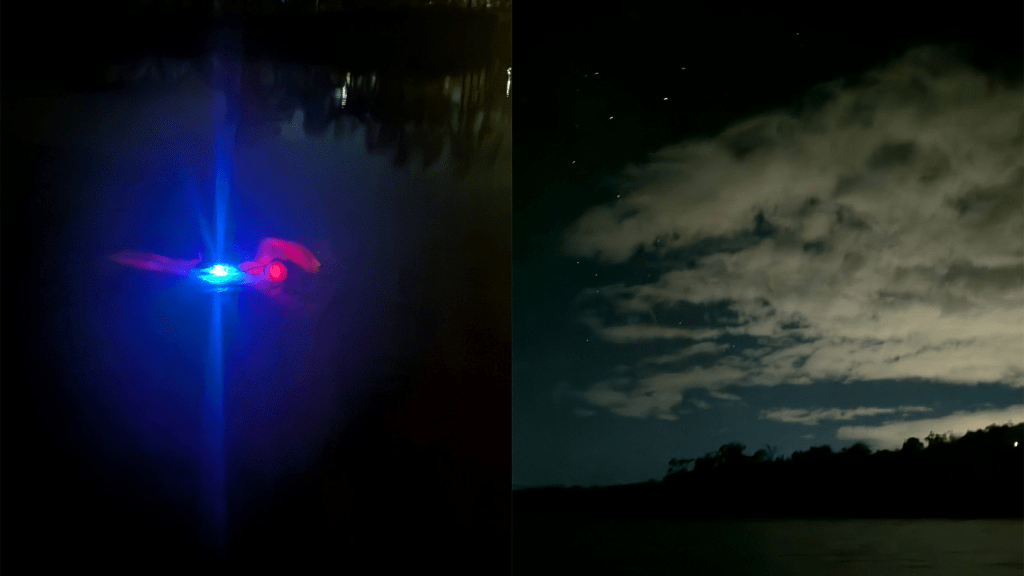
The swim includes four bridges. You start under the first, and the next ones don’t appear for some time — but when they do, they’re unmistakable. Fully lit, visible from a distance, and oddly comforting in the middle of the night.
Cold that wasn’t cold
The water started at about 17.2°C and rose to around 17.9°C during the swim. I genuinely noticed the difference — however I was warm throughout. The air temperature sat around 15°C, but once moving, I never felt cold in the water.
That surprised me, and it settled me early.
Choosing attitude, not forecasting pain
So I made a conscious decision: choose your attitude.
This swim came hard on the heels of the 25km Port to Pub (Blog here) – Saturday to Tuesday night- and I was nervous. The question wasn’t motivation — it was whether my body would decide, partway through the night, that the recovery time simply hadn’t been enough.
I didn’t pretend it would be easy. But I decided not to spend hours anticipating what might hurt. I made the choice to do these two swims close together — and the only productive way through was to lean into that choice and enjoy what I could.
For the most part, it worked.
The wobble
I had about ten minutes of difficulty around the two‑hour mark — roughly 1:30am. It wasn’t physical exhaustion so much as anxiety: shortness of breath, a sense of panic, the dark amplifying everything.
The solution wasn’t dramatic. It was basic: slow down, breathe, and find my rhythm again. I eased off, got back into my stroke, and reminded myself that in the dark, your brain can invent problems that don’t actually exist.
Once I settled again, I stayed settled.
Tide, turbulence, and trust
This swim is timed around the tide. You start with some resistance, and then at some point you catch the run — and the river begins to carry you. You can feel it in the water, almost like climbing onto it and swimming on top of it.
Not all of it was smooth. There were sections of turbulence, including one bend where, in the dark, I briefly thought we were heading the wrong way. We weren’t — it was just the river narrowing and moving differently as we rounded a corner.
Val called out obstacles when needed, and one bridge under partial construction created a strange, industrial lightscape above the water — beams, gaps, and spotlights cutting through the night.
“This next feed might be your last.”
I never ask how far I’ve gone. Knowing doesn’t get you there faster, and it can complicate your headspace.
So when I stopped for a feed around the 6½‑hour mark and was told, almost casually, that the next feed was likely to be my last, I was genuinely shocked. In my head, I’d been preparing for something closer to eight or nine hours — plan for the worst, hope for the best.
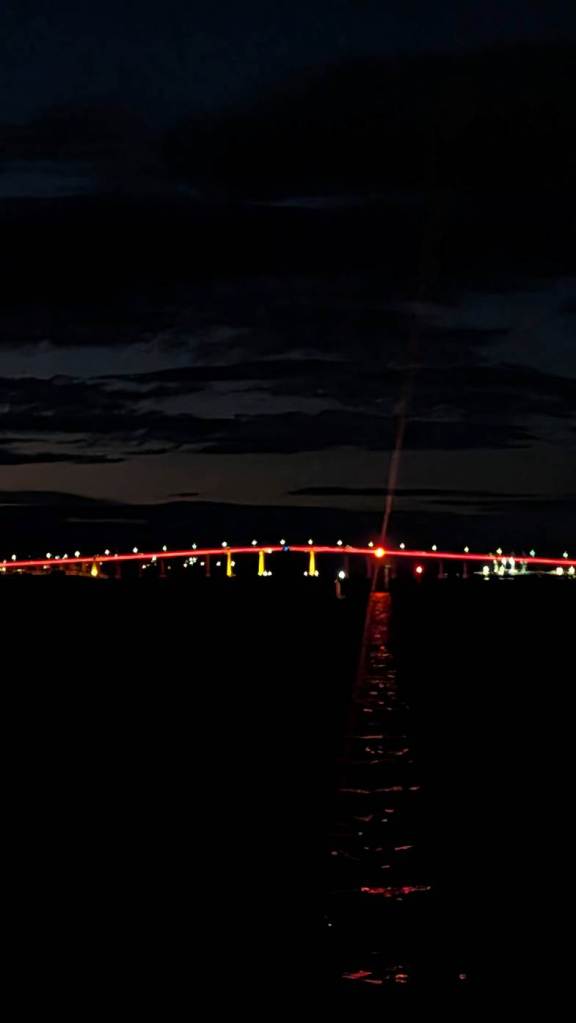
At around seven hours, after another feed, Val told me it was about forty minutes to the finish. I almost didn’t believe him — until I looked ahead and saw it: the Tasman Bridge, fully lit, unmistakable.
“Is that the finish?” I asked. It was.
Swimming into the lights
Swimming toward the Tasman Bridge at night was extraordinary. Watching it draw closer, light reflecting on the water, knowing the end was real — not theoretical — was deeply satisfying.
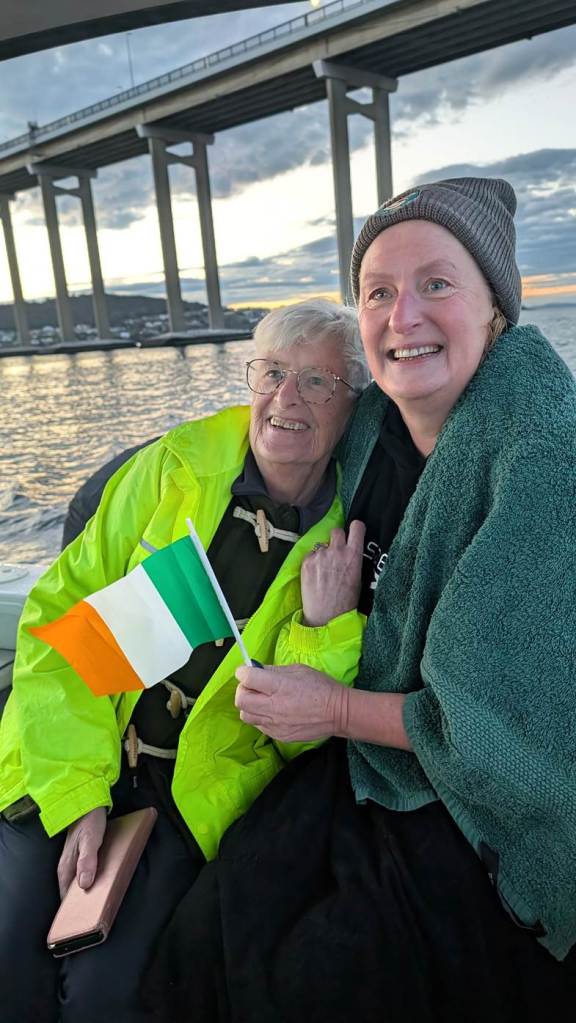
I swam under the bridge and finished. Later, as the boat moved through and daylight began to break, the lights went off. It felt as if the bridge had been waiting for me to swim under before returning to ordinary life.
Hot showers, medals, and breakfast
Back at the marina there was, without exaggeration, an outstanding hot shower — exactly what you want after more than seven hours in the river.
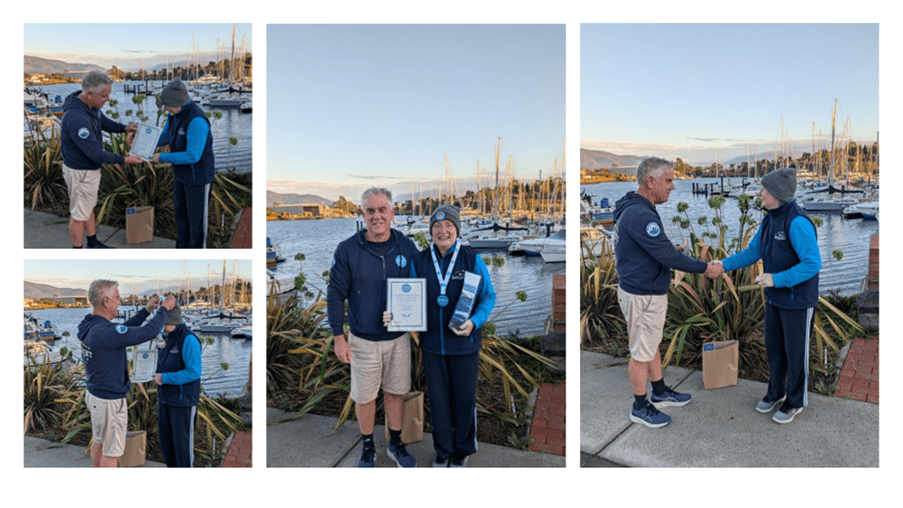
I was met by the Derwent River Swim Association, where Duncan presented me with my certificate, medal, and a beautiful bottle of Tasmanian champagne (still unopened — it deserves a proper moment).
We finished at the marina café with tea, coffee, and an excellent bacon‑and‑egg roll. Warmth, simple food, and the quiet satisfaction of being done.
Two swims, three days apart
I won’t pretend I wasn’t anxious beforehand. I was. And I wouldn’t suggest stacking swims this way lightly.
But I’m proud of how I approached it — committing to the decision, choosing my attitude, and enjoying the experience rather than fearing it.
If I compare the two swims, the Derwent suited me more. Cool water, darkness, steady rhythm, and less sun exposure play to my strengths. Port to Pub was fantastic, but hours of direct sun are not my natural habitat — something my Irish heritage probably explains.
Thank you
Long swims are never truly solo.
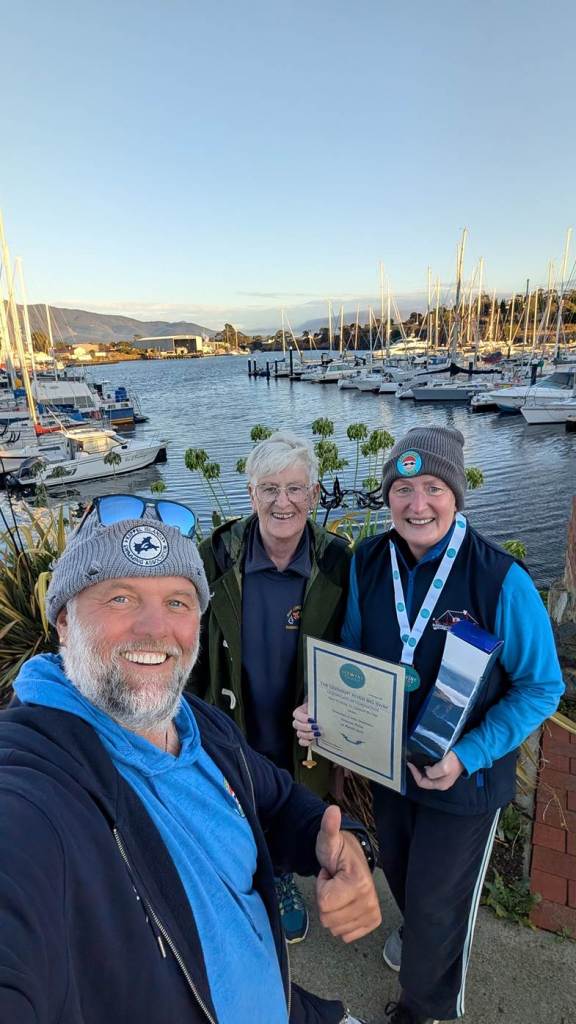
My thanks to Val, whose calm experience and deep understanding of swimmers made this night swim feel safe and well judged throughout. To Duncan and the Derwent River Swim Association, thank you for the warm welcome at the finish and the care behind this event.
As always, thank you to my mum — for the soup, the support‑boat miles, and the quiet constancy that underpins so many of these swims.
And thank you to everyone who follows along, checks in, and quietly (and loudly) cheers from afar.
As with my swims, this one was in support of Kenzie’s Gift which provides free counselling and bereavement support to children and young people facing grief, if you’re able to donate, I’d be deeply grateful: https://grainne.kenziesgift.com/
 IrishKiwiSwims
Wonderful! Well done Grainne – once again a great blog and great achievement xx
LikeLike